
Red Wolf in Green Clothing
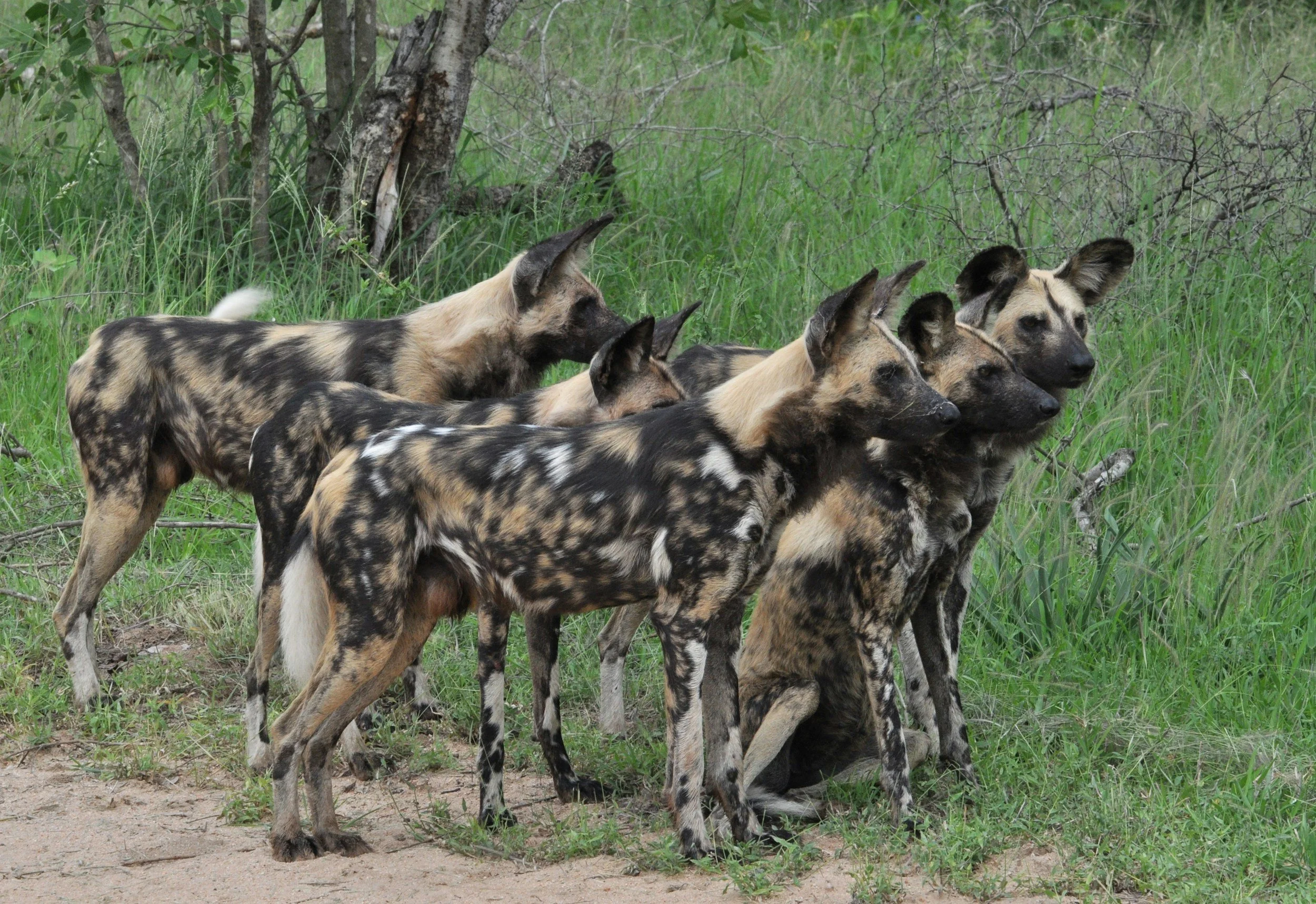
A top dog and followers, probably after concluding their sneeze voting
Why we took the wrong inspiration from pack leaders, and the long shadow it still casts
Looking at animals as a model for leadership might seem madness, but that’s what many of us have been doing unconsciously for decades.
An alpha male or female leader is at root a metaphor, drawn from nature in the 1980s, anchored in assumptions about wolf pack and chimpanzee behaviour. Business management and wider popular culture are still squeezing a lot of juice from this resilient comparison, and few noticed when the biologists who coined and popularised the term tried to issue a product recall over the past decade.
David Mech, who coined the term ‘alpha wolf’ while studying captive wolves, rejected it after studying wild wolf packs. In the wild, wolf packs are families led by a breeding pair. Younger subordinate offspring have some influence, and their cooperation is gained by the highest-ranking individuals through sharing rather than aggressive coercion. Mech compared the behaviour of the unrelated wolves thrown together in captivity to what might happen in a human prison.
Primatologist Frans de Waal can probably take most of the credit for the alpha male metaphor catching the imagination of business culture in the ‘80s, and he too has been trying to prise the metaphor away, pointing out that the alpha as aggressive, hypercompetitive and dominating primate is a limited caricature of the behaviours observed in nature. Despite or perhaps because of this distortion, the alpha lives on, as it speaks to a worldview that is still widespread, and resurgent – might makes right, the world is a dangerous place, only the strong survive, strength is power, and power is the only currency.
How does the wolf pack and alpha metaphor show up in groups, and in organisational development? Frederic Laloux in Reinventing Organisations uses the wolf pack as the archetype of ‘Red organisations’, where the leader’s position depends on the continued exercise of power, surrounding themselves with loyal lieutenants or family members who share the rewards of power, in exchange for keeping their followers in line. Street gangs and mafias are the prime contemporary examples Laloux gives of this kind of leadership culture. But in some respects this wolf pack dynamic is present today in law-abiding, ethical organisations.
Packs are resilient, adaptive decision-making units able to respond dynamically to changing contexts, and build consensus (for the curious, check out painted wolves ‘sneeze voting’). In some human contexts a strong hierarchy under an assertive leader can be adaptive too – and can have pack-like characteristics and shadow sides.
The founders of many start-ups, creative studios and purpose-driven organisations by their very nature tend to follow a pattern. ‘The Source’ - a visionary and assertive leader holding a bold idea - communicates it persuasively, succeeds in drawing in funding and is able to create rapidly through a tight group of followers, who share in the rewards. Small hierarchies arranged around an assertive leader with vision can be very effective at rapidly responding to new opportunities emerging in chaotic or unpredictable moments of transition.
In slightly larger organisations, this pack-like leader-plus-lieutenants group can bypass what they perceive to be inertia and decision paralysis in more egalitarian, cooperation and consensus-oriented ‘Green’organisations. ‘Green’ consciousness generates organisational cultures emphasising harmony, tolerance and equality, while still preserving a pyramid hierarchy - not self-management, self-leadership or self-organisation (the Teal organisation in Laloux’s stages).
What happens when you mix ‘Red’ pack-like leadership within ‘Green’ purpose-driven and creative start-ups? Likely the creative visionary who is also the rainmaker has a potent authority. If you are in such an organisation your influence is directly proportional to your proximity to ‘the Source’, and your ability to influence them informally is a key criterion for promotion. Around them you would probably find a small group of loyal followers operating without clear structures, wielding influence over a wider, more egalitarian organisation. Some of this core group play a translational role to smooth the interface between the ‘Red and Green’ cultures, eg ensuring organisational communications and processes comply with legal requirements, and appear palatable to ‘Green’ employees, while avoiding triggering irritation at bureaucratic stodginess in the ‘Red’ core.
If you're reading this description and wondering if this is a thinly veiled reference to your organisation, rest assured that it is based on more than a dozen case studies - from our own work and others. If the description feels familiar, you are not alone! Anecdotally, this pattern can play out quite frequently in creative arts organisations, and in mission-driven start-ups and non-profits. There might be benefits to making this arrangement work: the Red core keeps the creative fire burning bright, pursuing rapid evolution in the nimble way Red is uniquely good at, whereas the Green offers expertise, balance, ethical constraint and scale.
Clearly there are also risks of culture clash and harmful friction. Particularly when the unhealthy shadow side of Red plays out with collusion from Green: the exercise of power through unpredictability, lack of structure, and rewards for favourites, which can be misread as empowerment and tolerated by Green employees, for whom family is the dominant organisational metaphor.
What’s at the root of this shadow-side? Part of it may be slipping from maintaining status through prestige (eg valued capabilities, contributions) into maintaining status through dominance (wielding power to coerce, bully etc) – a distinction pointed out by Yann LeCun to Elon Musk. Seeking dominance over everyone is not a stable strategy for thriving or effective leadership teams, organisations, or societies.
Does some of this ‘Red within Green’ leadership culture ring true? If you are a purpose-driven organisation or network ready to consciously evolve your culture and structure, with the courage to look at shadows as well as strengths, we want to hear from you.
Email hello@bramble.co for a confidential conversation to inform our research into the power and untapped potential in helping top teams illuminate what they can’t or won’t see and acknowledge.
